Asics Drops Megablast Foam Into the Novablast 6
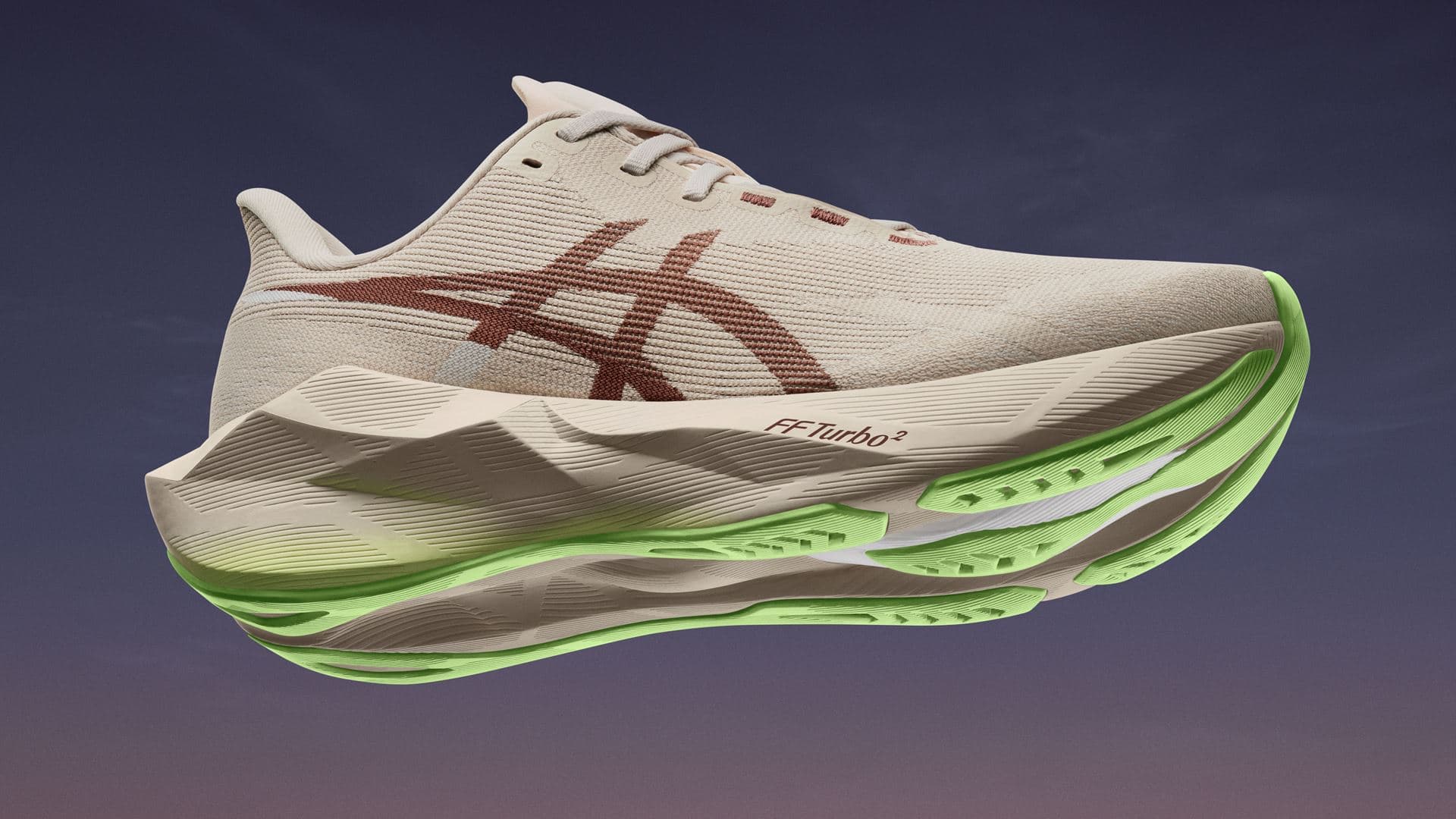
The Asics Novablast 6 launches globally on 1 July 2026 at $155 / €160. The biggest change is in the forefoot: FF Turbo Squared, the same ATPU foam used in the Megablast, paired with FF Blast Max in the heel. Reviews call it bouncier and more fun than the v5, but the transition is divisive.
What happened
Asics announced the Novablast 6 on 29 May 2026, with global retail availability set for 1 July. US runners get it on 6 July at $155; European pricing is €160. The headline change is the foam package: for the first time in the Novablast line, the forefoot uses FF Turbo Squared, the same lightweight, springy ATPU compound that sits inside the much pricier Asics Megablast. The result is a daily trainer that finally has some of the pop of Asics' top-end racing platforms, paired with the comfort-first heel the Novablast line has always been known for.
The midsole: two foams, one shoe
This is where the Novablast 6 lives or dies. Asics has split the midsole into two clearly different feelings:
- Heel: FF Blast Max, soft and cushioned, designed for impact protection on easy-pace landings.
- Forefoot: FF Turbo Squared, the springy ATPU compound shared with the Megablast and Superblast 2, designed to push back at toe-off.
The geometry retains the trampoline-style midsole that gave the Novablast its identity in the first place. Stack height is 41.5mm at the heel / 33.5mm at the forefoot, an 8mm drop. Weight is 8.8 oz / 249g for a men's US 9 and 7.7 oz / 218g for a women's US 8, slightly lighter than the Novablast 5 in the same sizes.
Asics calls the new build "highly energised" with a "trampoline-inspired bounce." Paul Lang, Senior Manager of Global Product for Performance Running Footwear, said the Novablast franchise has become "one of our most loved and fastest-growing running shoes" globally. The v6 is clearly Asics trying to widen the gap.
Upper and outsole
The other meaningful change is up top. Asics has dropped the jacquard mesh used on the Novablast 5 in favour of a woven technical mesh, aimed at better breathability and a more adaptive midfoot hold. Reviewers report the new upper fits true to length but with slightly more heel padding than the v5, enough that some testers suggested sizing down by half a size if you're between sizes.
Underfoot, Asics has put AsicsGrip rubber in the forefoot for tackiness off the toe and AHAR LO at the heel for durability. The split is similar to what the brand has been doing on its premium models, and reviewers say grip on wet pavement is a clear step up from earlier Novablasts.
What the early reviews say
The reviews dropped together with the shoe, and most are positive, with one consistent caveat.
Believe in the Run called it "easy to recommend across the board," with reviewer Meaghan summing it up as "not a shoe that's going to stop you in your tracks, but that's kind of the point: it works." Three of their testers landed on the same word: versatile.
Doctors of Running is more divided. The forefoot is universally praised for "noticeably more bounce and pop" over the v5 thanks to the FF Turbo Squared, but reviewer Matt Klein flagged the heel bevel as "slightly lateral and steep," producing what he describes as a "slappy" heel-to-toe transition that won't suit every runner. He recommends the v6 mostly to midfoot and forefoot landers, or runners with a low heel-strike inclination angle.
The other common note: the v6 is a $15 price hike over the v5, and that price puts it shoulder-to-shoulder with shoes like the Saucony Ride 19 and the Nike Pegasus Plus.
Where it fits in the Asics line
The Novablast 6 is the versatile daily trainer in Asics' current road lineup. Above it, the Superblast 2 sits as the long-run / faster daily trainer at a higher stack and price, and the Megablast sits above that as the premium max-cushion model that pioneered FF Turbo Squared. Below it, the Cumulus keeps the everyday cushion role, and the Magic Speed 5 handles tempo workouts.
By moving FF Turbo Squared down into the Novablast, Asics is doing what super-shoe brands have been doing on the racing side for two years: letting premium foams trickle down. The Novablast 6 is the cheapest shoe in the Asics range that uses the same forefoot foam as a $250 trainer.
The bigger picture
The $150–$160 neutral daily trainer is the most crowded category in road running. Nike has the Pegasus Premium and the Pegasus Plus. Saucony has the Endorphin Speed 4 and the Ride 19. Adidas has the Adios 9. New Balance has the 1080v14 and the Rebel v5. Hoka has the Mach 6 and the Clifton 10. None of these shoes are bad. Almost all of them are good.
What Asics has done with the Novablast 6 is take the most-liked daily trainer of the last two cycles, give it a foam upgrade most brands keep behind a premium-shoe paywall, and tweak the upper and outsole hard enough to call it a generation jump. Whether the new heel transition lands with longtime Novablast loyalists is the only real open question, and the answer will likely depend on where in your foot you land.
For runners deciding between a v5 still on shelves and the new v6, the call is simpler than it usually is. The v6 is bouncier, lighter, and more fun underfoot. The v5 is calmer, smoother through the gait, and now usually $20–$30 cheaper. Both are good shoes. The v6 is the one Asics wants you to wear.