How the Two Oceans 2027 Ballot Actually Worked
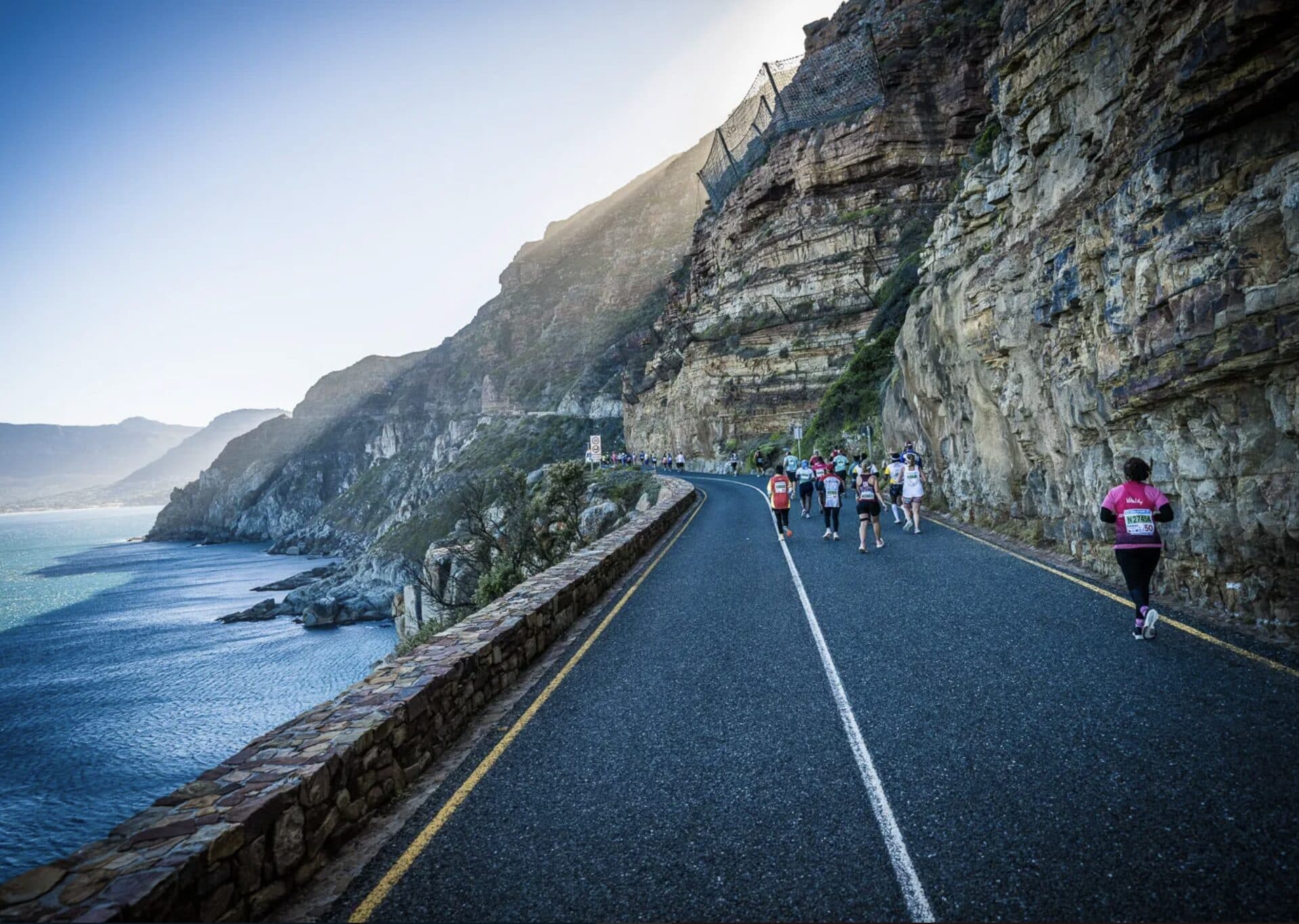
The results landed on 18 August and the questions started immediately. Two Oceans has explained the mechanics, and the application figures are now out too: the Ultra drew 25,000 applications for 12,000 ballot places, the Half drew 37,000 for the same 12,000. That makes the Half the harder race to get into by some distance. Seven or more finishes doubled your chance, licensed club runners got the first half of the Half draw to themselves, and any place left unpaid by midday on 31 August goes back into a second draw.
The short version
The 2027 ballot closed on 16 August and results went out on Tuesday, 18 August. Two Oceans has since explained how the draw was run, and the application numbers are out as well, which together answer the question every WhatsApp group has been asking: why did my training partner get in and I didn't?
Start with the numbers, because they reframe everything else:
- Ultra: about 25,000 applications for 12,000 ballot places. Roughly a 1 in 2 chance.
- Half: about 37,000 applications for the same 12,000 ballot places. Roughly a 1 in 3 chance.
The Half was the harder race to get into, by a wide margin. That surprises people who assume the 56km race is the exclusive one, and it is worth sitting with before you take the result personally.
Those application figures come from The Running Mann, who published the breakdown the evening the results went out. The race's own email to applicants explained the mechanics but did not include the totals, so treat the numbers as well-informed rather than officially released.
The mechanics behind those numbers:
- It was a random ballot, formalised and approved by the TOM Board and independently overseen by PKF Auditors
- The Ultra ran as one single draw
- The Half ran as two draws of 6,000 each, and the first was open only to licensed club runners
- Seven or more finishes doubled your chance of being drawn
- The ballot is only part of the field. 12,000 of each event's 21,000 places came out of the hat
Nobody bought their way to the front of the ballot, and nobody was picked on merit. It was a hat, with some people holding two tickets instead of one.
The Ultra: one draw, one hat
The Ultra was the simple one. Every applicant went into a single random draw: about 25,000 applications for 12,000 places, which works out to a success rate near 48 percent.
The only weighting was for loyalty. Runners with seven or more finishes received an additional ballot entry, which is to say double the chance of being drawn. Two tickets, not a reserved place. A runner with eight finishes had roughly twice the odds of a first-timer and still no guarantee, which is exactly how a weighted random draw is supposed to behave.
Worth being clear about what this draw did not do: it did not check your qualifier. Being drawn and being qualified are two separate things. If you were successful, you still need a sub-5:00 marathon or the equivalent at a longer distance, run after 30 May 2026, loaded on the entry system before the deadline.
The Half: two draws, and the first one was restricted
This is the part that explains most of the confusion, and it is the detail worth reading twice.
About 37,000 people applied for 12,000 places, a success rate near 32 percent. Those 12,000 were then split down the middle:
- The first 6,000 were drawn only from licensed club runners
- The second 6,000 were drawn from everyone left: licensed runners who missed out in the first half, plus all unlicensed runners
Seven or more finishes doubled your chance in both halves.
Read that in order and the consequence is obvious. If you are not a licensed club runner, you were not in the first draw at all. You were competing for 6,000 places rather than 12,000, against a pool that had just been topped up with every licensed runner who missed out.
That is not a secret rule or a stitch-up, and the race has now published it plainly. But it does mean the odds were never flat across the field, and it is the single strongest argument for joining a club and taking out a permanent licence before the next entry cycle. For the Ultra you need a licence anyway. For the Half, it moves you into the earlier draw.
If you entered both races
The "Two Ballots. One Entry." system worked the way it was described when entries opened, and the name is the important part: two ballots, one entry.
Applying for both put you in both draws, run independently of each other. But the ballot could never hand you both races. If you came out of both draws, the preferred event you nominated at entry decided which one you actually kept, so nobody held two places while somebody else held none.
That means the ballot alone will not get you a double. The only way to race both the Half and the Ultra over the weekend is to buy a charity entry for the second event. If doing both was the plan, that is the route, and it does not depend on another draw going your way.
If you were drawn in only one, that is the one you have. And if the race you wanted was the one you lost, the preference you set back in August is doing exactly what you asked it to.
Who checked it
Two Oceans has been explicit about oversight, which matters for a race handing out 24,000 places by chance.
The ballot process was formalised and approved by the TOM Board, and PKF Auditors independently oversaw every draw to confirm the correct procedure was followed. That is an external audit firm signing off on the mechanism, not the race marking its own homework.
The other thing worth understanding is that the ballot was never the whole field. Each event holds 21,000 places, and only 12,000 of those went into the hat. The rest were allocated before the draw:
- 5,250 per event to Discovery, a 25 percent allocation
- Blue Number Club members and runners with nine finishes, who had a guaranteed early entry window
- 1,000 TOMI charity entries per event
- Other charity entries, sponsor allocations and invited elites
So roughly 43 percent of each field was spoken for before a single ballot ticket was drawn. That is not unusual for a race this size, and it is the context that makes a 1 in 2 or 1 in 3 ballot chance easier to understand.
Both the number of applications and the number of ballot places available were up on the 2026 ballot, so the race is growing on both sides of the equation at once.
If you missed out, and if you got in
If you were unsuccessful, you are not finished yet. Four routes remain:
- A second draw. Every place that goes unpaid by the deadline gets redrawn. It will be a small draw, because it is made up only of entries nobody paid for, but it is a real second chance and it costs you nothing to still be in the pool.
- Substitutions. The race plans to open the substitution process as early as possible, run the same way it was in 2026.
- Official charity entries, including the 1,000 TOMI entries per event. These depend on your fundraising rather than on somebody else's misfortune, which makes them the most reliable route of the four.
- Sponsor competitions.
If you were successful, the clock is the only thing that matters now. Payment closes at midday on Monday, 31 August. An entry drawn is not an entry secured, and this is not a soft deadline: the unpaid places are exactly what feeds the second draw. Somebody else is waiting for yours.
Ten days, one payment. Then you can start worrying about Chapman's Peak.
What to do before the next one
If this cycle did not go your way, the next ballot is roughly a year out and there are only a few things that actually move your odds:
- Join a club and get a permanent ASA licence. It puts you in the first 6,000 of the Half draw instead of the second, and it is compulsory for the Ultra anyway. This is the single biggest lever available to most runners.
- Keep finishing. The loyalty ladder is real and it has two rungs: seven finishes doubles your ballot chance, and nine finishes earns a guaranteed early entry window that skips the hat altogether.
- Get the qualifier done early. Find a race, build a plan for it, and do not spend March hunting a late marathon.
Beyond that it is a hat, a random number and an auditor watching. There is no strategy for that part, and there is something quite honest about a race that says so out loud.